What YouTube Watch Hours Really Are (Watch Time vs Views vs Retention)
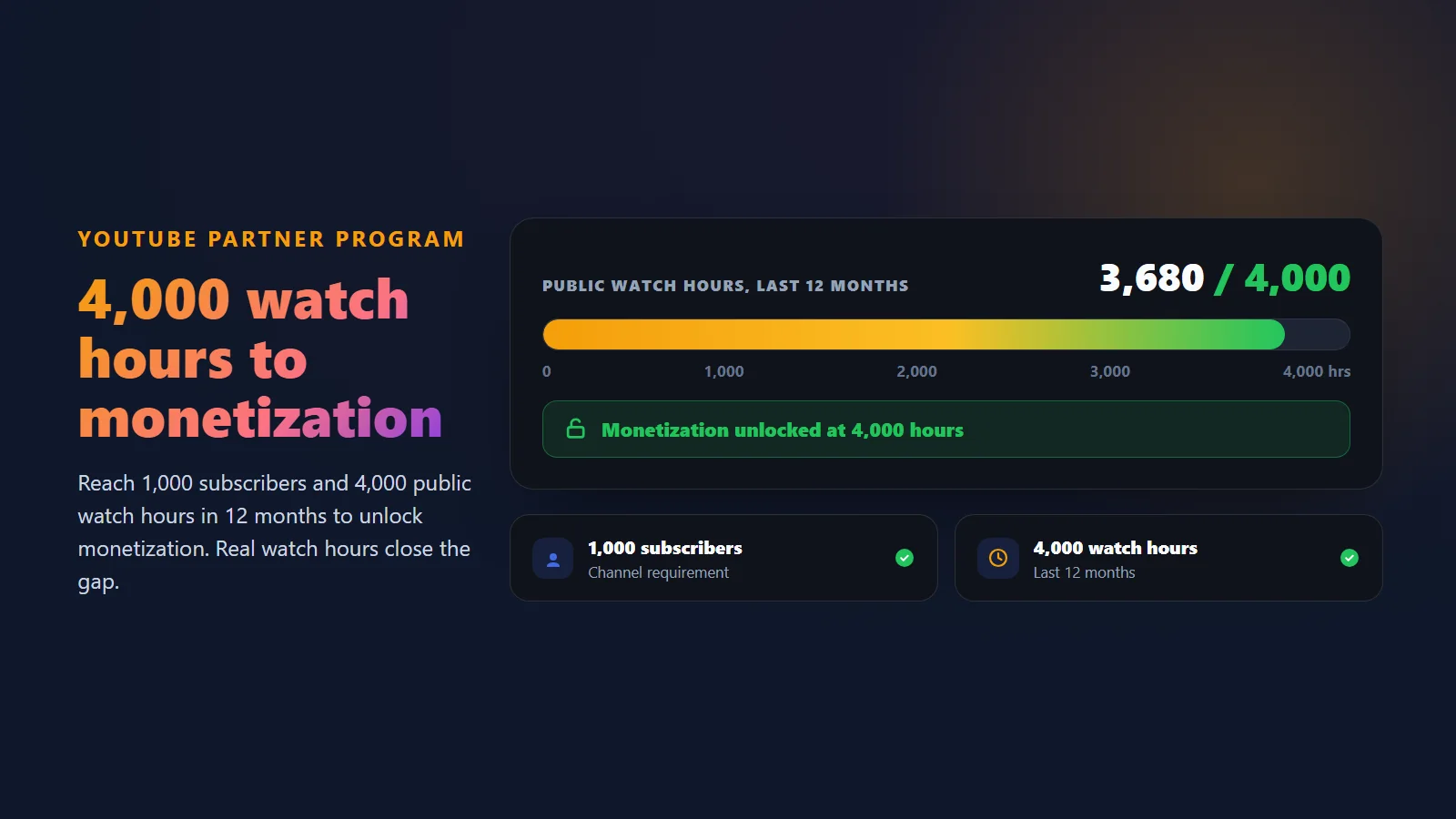
minutes of public watch time stand behind the “4,000 hours” every creator needs to monetize
A watch hour is exactly what it sounds like: one genuine hour that high-quality accounts spend watching your videos. Add every viewer's minutes together, divide by 60, and you have your watch hours. It is the single metric that decides whether YouTube lets you earn money, which is why creators buy it.

Most creators confuse three numbers. Getting them straight is the foundation for everything else in this guide:
Views
Someone pressed play. A view can last two seconds. It looks good on a thumbnail, but on its own it earns you nothing.
Watch time (hours)
The total minutes actually watched, across every view. This is what counts toward monetization and what the algorithm rewards.
Audience retention
The percentage of each video people watch before leaving. High retention is how a single view turns into a lot of watch time.
YouTube optimizes harder for watch time than for any other public number, because time-on-platform is what it sells to advertisers. A video with 1,000 views that holds attention can be worth far more watch time, and far more reach, than one with 10,000 views that everyone abandons in the first ten seconds.
“Views measure curiosity. Watch hours measure value. YouTube only pays you for the second one, so that is the number worth investing in.”
Because watch hours are the currency of monetization, they have also become something creators buy to reach the threshold faster. The rest of this guide is the honest, research-backed version of how that works, starting with the gate itself. If you are ready, you can buy YouTube watch hours here, but read the next two chapters first so you spend on hours that actually count.