What a YouTube Like Actually Signals
Start here, because it reframes the whole purchase: a like is a vote, not a trophy. When someone taps the thumbs-up, they are telling YouTube one thing in the lowest-effort way possible. They are saying "I am satisfied." YouTube treats that tap as feedback it can learn from, not as a score it adds up.
In its own help docs, YouTube says the recommendation system pays attention to "what they watch, what they don't watch," and "likes and dislikes." Likes sit in that list as one of the satisfaction signals it reads to decide what to recommend next. (YouTube Help: search and discovery.)

A like is the cheapest "I enjoyed this" a viewer can give. It feeds YouTube's read on satisfaction and tells the next viewer this video was worth their time, which is exactly why a healthy like count helps and a bot-inflated one does not.
What a like really does
- Feeds the satisfaction signal YouTube uses to personalize recommendations.
- Acts as visible social proof that nudges new viewers to engage.
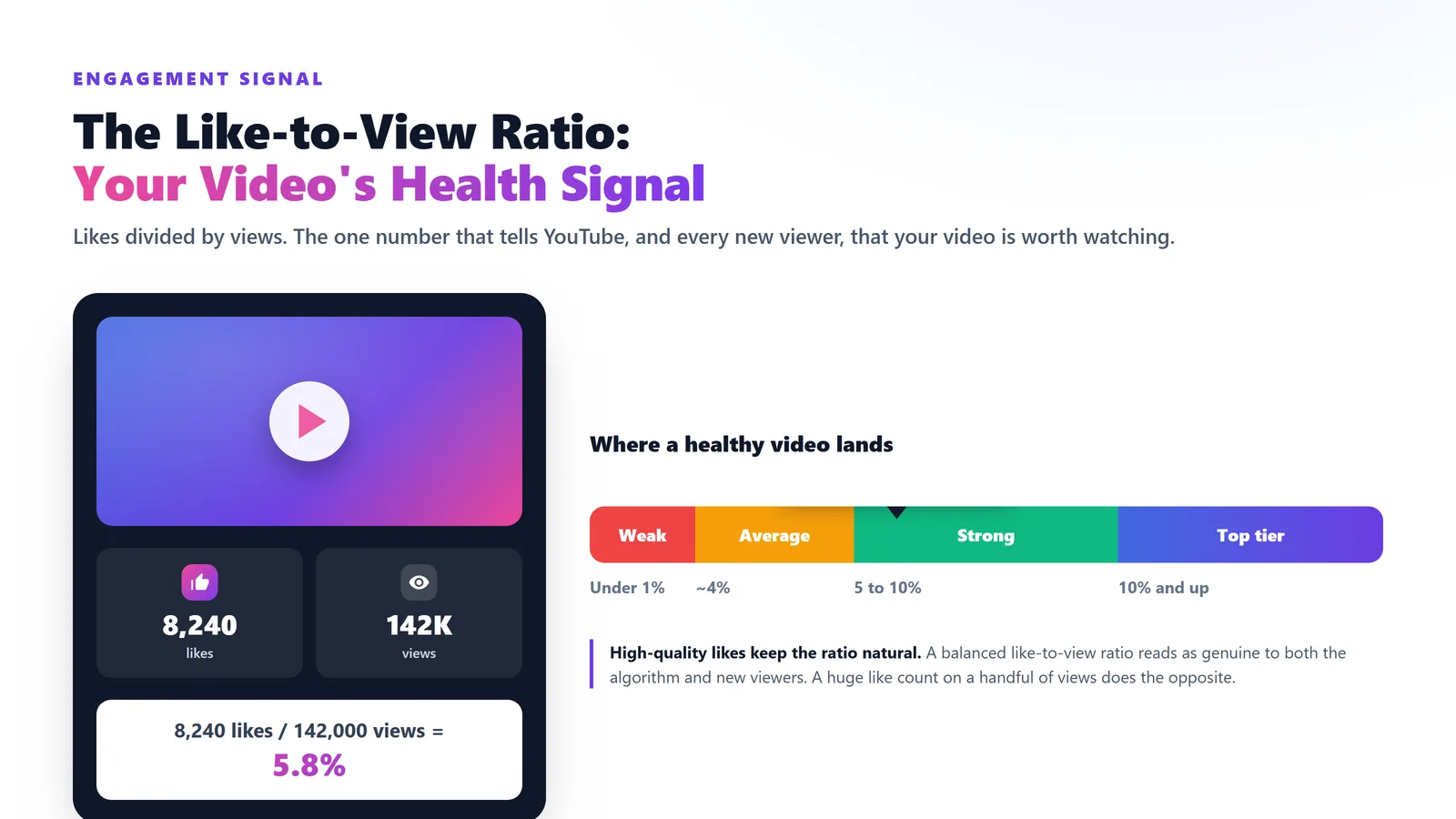
- Helps the like-to-view ratio that hints your audience is happy.
What a like is not
- A direct ranking lever. Watch time and retention carry far more weight.
- A way to monetize. Likes do not count toward the Partner Program.
- A magic button. A like on a video nobody finishes changes little.
The honest takeaway. Likes are real and useful, but they are a supporting signal, not the engine. Treat them as a way to confirm and amplify a video people genuinely enjoy, and they pull their weight. Expect them to rank a weak video on their own, and they will disappoint you. The rest of this guide is built on that distinction.